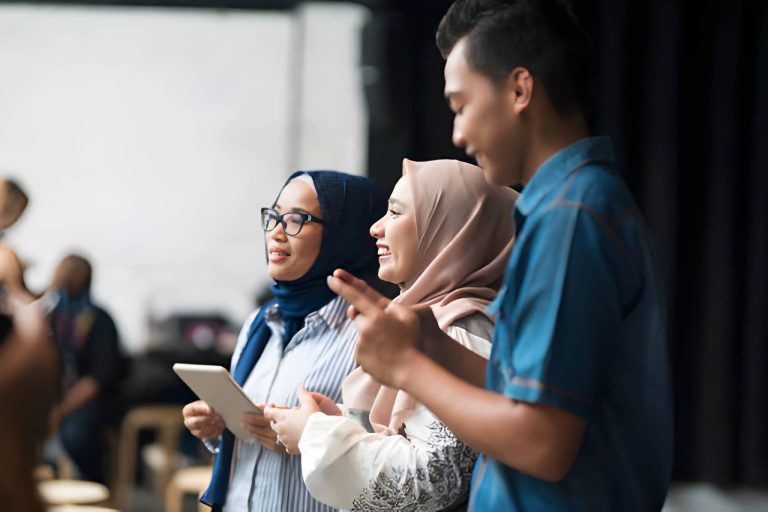
Ar Holistic Therapies is working with local mosques and madrasas to inspire and encourage them to expand their impact beyond religious settings, empowering individuals to contribute positively to all areas of life.
Can you imagine how the world would be if Islamic scholars played their roles not only within the mosque and madrasa but also actively contributed to their communities through diverse, impactful professions?
Imagine them as:
• Educators: School teachers, university professors, tutors, physical education instructors and special education specialists, shaping young minds with both academic knowledge and moral values
• Healthcare Professionals: Doctors, nurses, paramedics, dentists, pharmacists, mental health counsellors and physiotherapists, providing compassionate, ethical care and promoting holistic well-being
• Legal and Security Forces: Lawyers, judges, police officers, prison officers, army officers and security personnel, ensuring justice, fairness and safety based on Islamic principles
• Engineers and Technicians: Civil, mechanical, electrical and software engineers, IT professionals, architects, surveyors, plumbers, electricians and technicians, creating and maintaining the infrastructure of our societies
• Business and Finance Leaders: Bank managers, financial advisors, accountants, entrepreneurs, business owners and marketing professionals, promoting ethical trade and financial practices
• Community and Social Workers: Social workers, charity workers, HR managers, life coaches and personal trainers, supporting mental and physical well-being and strengthening community bonds
• Creative and Media Professionals: Journalists, writers, authors, artists, filmmakers, graphic designers, photographers, musicians and marketers, using their platforms to spread positivity and truth
• Skilled Tradespeople: Carpenters, builders, tailors, fashion designers, hairdressers, barbers and janitors, contributing to society with essential skills and craftsmanship
• Transportation and Logistics Workers: Bus drivers, taxi drivers, train operators, pilots, delivery drivers and logistics managers, ensuring the smooth flow of goods and people
• Agricultural and Environmental Experts: Farmers, agricultural workers, environmentalists, conservationists and wildlife protectors, promoting sustainability and stewardship of the Earth
• Retail and Service Workers: Shopkeepers, waiters, restaurant workers, customer service representatives and retail managers, providing respectful and ethical service
• Athletes and Sports Coaches: Professional athletes, sports coaches and fitness trainers, promoting physical well-being and discipline
If they engaged in these roles with the same sincerity, integrity, humility and taqwa (God-consciousness) that they exemplify in religious spaces, the impact on society would be profound. Their influence, grounded in Islamic teachings and principles, would extend beyond spiritual guidance, fostering a harmonious, just and morally upright community, ultimately contributing to a better world.
Instead of limiting their impact to the walls of the mosque and madrasa, their piety, honesty and humility would become living examples for those around them, inspiring positive change in every corner of society. They would not only educate hearts but also uplift entire communities, embodying the true spirit of Islam in every aspect of life, bridging the gap between faith and everyday action and proving that spirituality is not separate from the practical realities of the world.
This approach would build a vibrant, resilient and compassionate society where faith is not confined to rituals but is lived in every profession, every interaction and every decision. It would create a community where every individual becomes a beacon of positive change, transforming not only themselves but the world around them.
Historical Context and Current Limitations
The activities of many Muslim scholars have historically been centred around mosques and madrasas, focusing primarily on religious education, spiritual guidance and the preservation of Islamic knowledge. While this approach has ensured the transmission of sacred texts and teachings across generations, it has sometimes limited the broader social impact scholars could have in their communities.
Several reasons contribute to this:
1. Institutional Tradition and Focus
Mosques and madrasas have traditionally served as the primary centres for religious learning and spiritual development. This historical focus has often prioritised ritual worship, theological discourse and personal piety over broader social engagement.
2. Lack of Practical Integration
Many religious curriculums emphasise classical texts and theological principles, with limited focus on practical, real-world issues like economic development, mental health, social justice or environmental sustainability. This gap can make it challenging for scholars to address modern societal needs.
3. Isolation from Broader Society
In some contexts, religious scholars have become isolated from mainstream social and political life, either by choice or due to external pressures. This separation can reduce their influence in addressing broader societal challenges.
4. Perception of Secular and Sacred Divide
Some scholars view their primary role as guardians of spiritual and moral values, potentially avoiding political or social activism to maintain religious purity or avoid controversy.
However, many modern scholars and Islamic institutions are increasingly recognising the need for a more holistic approach, integrating spiritual guidance with social activism, community welfare, mental health support and environmental stewardship. This shift aims to reconnect religious leadership with broader societal impact, fulfilling the Islamic principle of khilafah (stewardship) to make the world a better place.